
Help Center

In our help center, you will learn how to choose the correct belt or spare part for your device. We provide clear guides, practical tips and a belt size calculator to help you select the right solution for turntables, tape recorders, CD players and other devices.

List of articles

How to Choose the Correct Belt

The correct belt is essential for the reliable operation of a turntable, cassette deck, CD player or any other audio device. On this page, you will find a simple guide on how to choose, measure and verify the correct replacement belt.

1. The easiest way – by brand and model

If you know the brand and exact model of your device, this is the fastest and most reliable way to find the correct belt.

  • Enter the brand and model into the search bar (for example Yamaha YP-B11).
  • All compatible belts and other spare parts for that device will be displayed.
  • If you are unsure, contact us – we will be happy to verify compatibility.

Tip: We always recommend this method if you know the exact model designation of your device.

2. I have the original belt – how to measure it

If you still have the old or broken belt, you can use it to roughly determine the correct size of the replacement.

  • Place the belt on a flat surface. The more accurate the measurement, the more accurate the result.
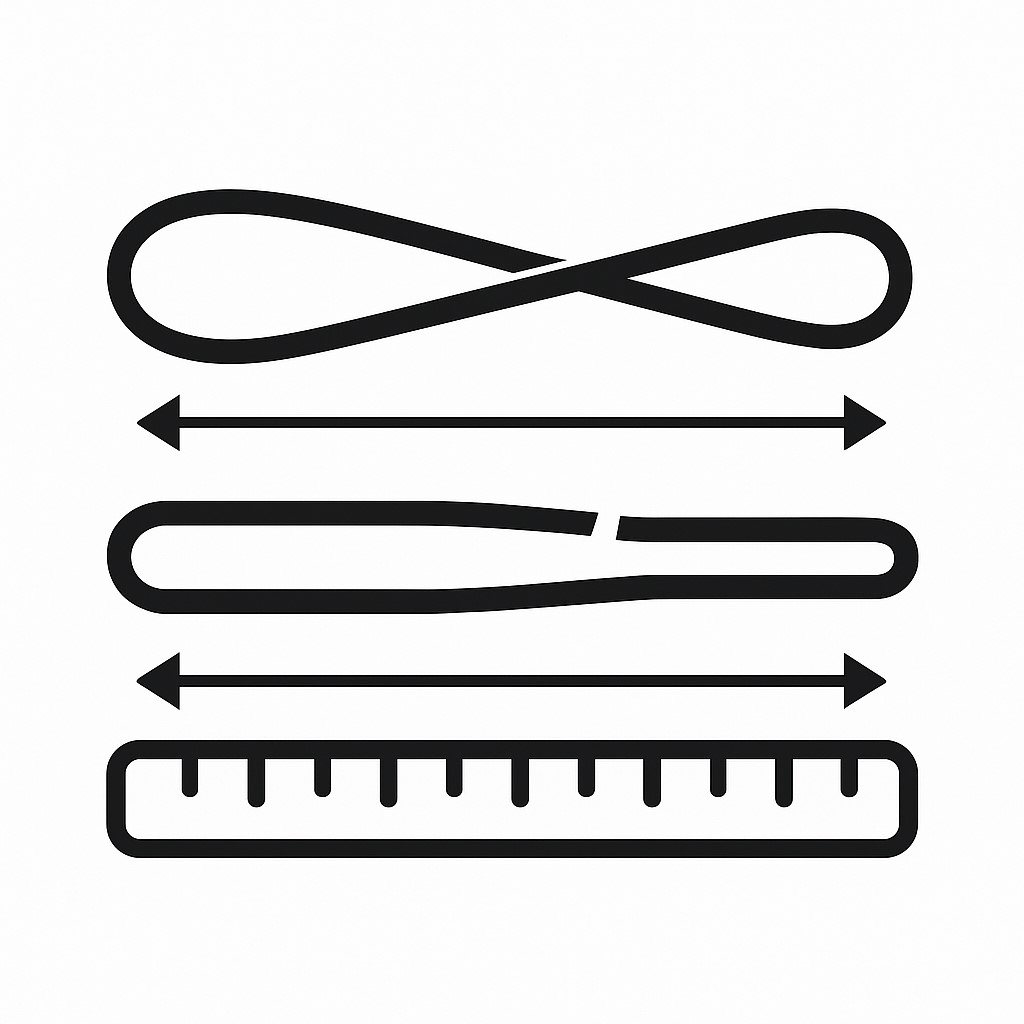
  • If the belt is intact, fold it in half and measure the length of one side. Multiply the result by two and enter this value into the calculator as the “circumference”.
  • If the belt is broken, measure the entire length in a relaxed state (without stretching) and enter the result into the calculator as the “circumference”.
  • Measure the width and thickness using a caliper or ruler (approximate values are fine) and enter them into the calculator.
  • Based on the calculated length and the belt type (flat / square / round), choose the closest available size.

Note: A new belt is usually a few percent shorter than the old stretched one to ensure proper tension.

3. I don’t have the original belt – A, B, C measurement

If the belt is missing completely, you can determine the required length by measuring the mechanism.

  • A – diameter of the smaller pulley (mm)
  • B – diameter of the larger pulley (mm)
  • C – distance between the pulley centres (mm)

Procedure:

  • Measure the diameter of the smaller and larger pulley (A and B).
  • Measure the centre-to-centre distance C between the two pulleys.
  • Measure the width of the belt track so you can also choose the correct belt width.
  • Enter A, B and C into the calculator below and it will provide an approximate recommendation.

4. Online belt calculator

After entering the dimensions of the old belt or the A, B, C values, you will immediately receive an approximate recommended length of the new belt. The calculation will help you select the correct size and also allows us to expand our database of compatible models and spare parts.

Warning:

The calculator result is only approximate. The accuracy of the result depends on the accuracy of your measurements.

We recommend using precise measuring tools and following the instructions carefully. It is advisable to repeat the measurement or verify it using another method, for example by measuring the circumference with a string.

Compare the calculated size with our belt selection. We usually recommend choosing a slightly smaller circumference to ensure proper tension, especially if you are not completely sure about the accuracy of your measurement.

When entering the belt width, especially for turntables, also check the pulley width. The belt must always be narrower than the pulley to prevent slipping or abrasion.

Obrázek pro výpočet soukolí 


Obrázek pro měření řemínku 

5. Not sure what to choose?

We are happy to help you find the correct belt. Contact us. To speed things up, we recommend sending us:

  • the brand and model of your device,
  • a photo of the mechanism or the old belt (if available),
  • a description of the issue or any other useful information.

Based on these details, we will recommend the most suitable option.

6. Find a belt by device type

If you prefer not to measure, you can go directly to the categories and choose a belt by device type:

7. Why FixPhono?

  • Specialists in belts and spare parts for audio equipment.
  • High-quality materials and verified replacements for original parts.
  • Expert advice and individual support.
  • A continuously expanding range and compatibility database.
How to Choose and Replace a Pinch Roller


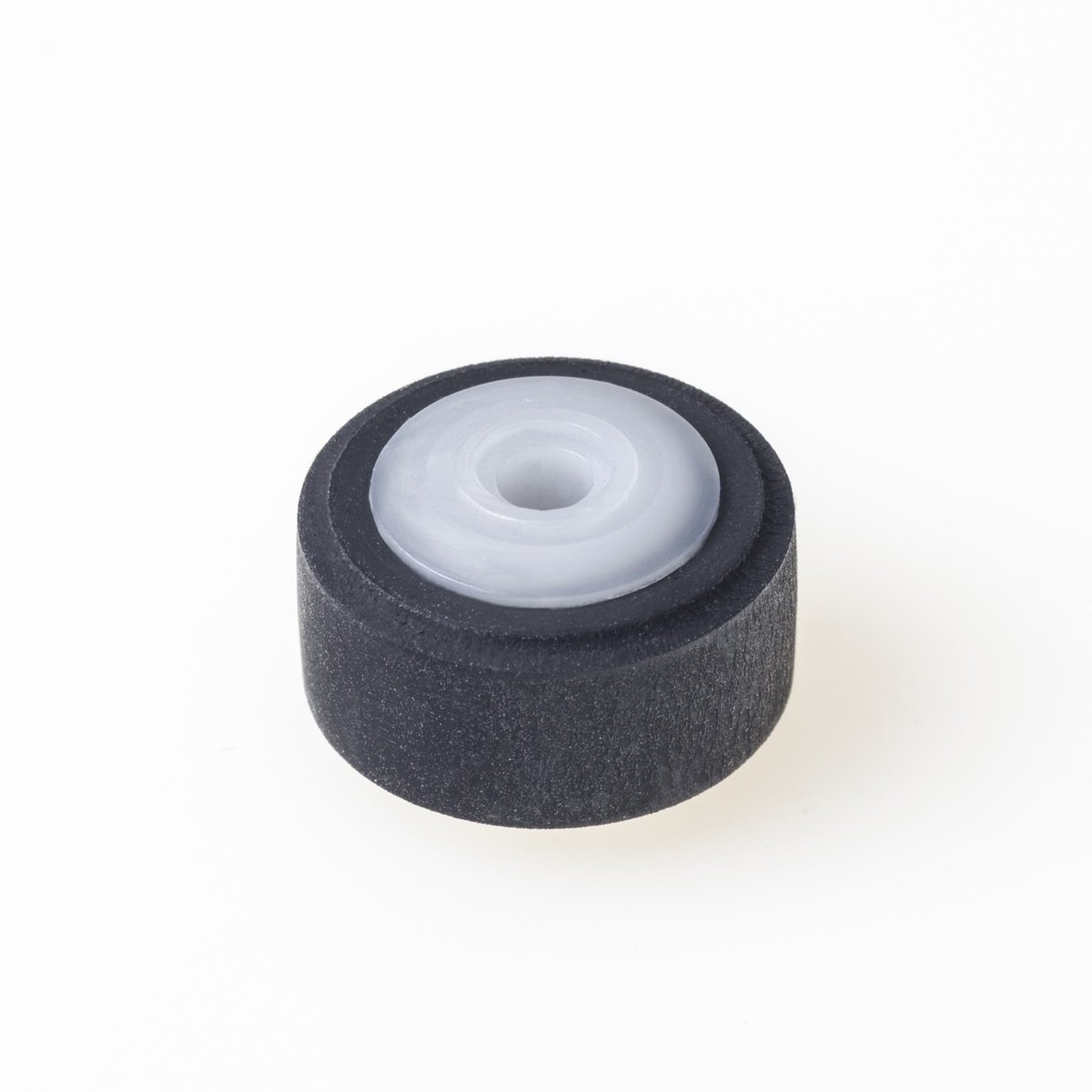
The pinch roller is one of the most important mechanical components of tape recorders and cassette players. It is a rubber wheel that presses the tape against the metal shaft (capstan) and ensures stable tape movement across the heads. If the pinch roller becomes hardened, dirty or deformed, it can cause speed instability, degraded sound quality or even tape damage.

What is a pinch roller and what is its function

The pinch roller works together with the capstan shaft. The capstan determines the tape speed, while the pinch roller presses the tape to prevent slipping. A properly functioning pinch roller is essential for:

  • stable playback speed (reduced wow & flutter),
  • consistent tape contact with the heads,
  • smooth tape transport operation,
  • protecting the tape from creasing and damage.

How to recognize a worn pinch roller

Rubber ages even without use. In older devices, replacing the pinch roller is a common and highly effective service. Typical symptoms include:

  • speed fluctuations and audible pitch instability,
  • tape twisting, wrinkling or being “chewed” by the mechanism,
  • the roller surface being hard, shiny, cracked or sticky,
  • deformation (oval shape) or uneven rotation.

How to choose the correct pinch roller

The most common mistake is selecting a “similar” roller. Dimensions and material properties must match the original exactly. When selecting, check:

  • Outer diameter – affects tape pressure and transport speed,
  • Width – important for stable tape guidance,
  • Bushing width – ensures proper seating in the holder,
  • Inner hole diameter – must fit precisely on the shaft.

Recommendation: measure the original roller with calipers and compare all parameters with the replacement part.

How to replace the pinch roller step by step

You will need:

  • a new pinch roller,
  • tweezers or small pliers,
  • isopropyl alcohol (IPA) and cotton swabs.
  1. Disconnect the device from power and prepare a clean workspace.
  2. Remove the cover (top or bottom, depending on the model).
  3. Locate the pinch roller near the capstan.
  4. Remove the retaining clip holding the roller (be careful, it may spring off).
  5. Remove the old roller and note the order of any washers.
  6. Clean the shaft and capstan with IPA.
  7. Install the new roller and check that it rotates freely.
  8. Reinstall the clip and washers in the original order.
  9. Manually rotate the mechanism and ensure proper contact with the capstan.
  10. Test playback and check tape alignment.

Important: Never lubricate the pinch roller or capstan. Surfaces must remain clean and dry to prevent slippage or contamination. If unsure, leave the replacement to a professional service.

How to Choose the Correct Idler Wheel

Choosing the correct idler wheel is one of the most common questions when repairing and maintaining tape recorders, cassette players and turntable mechanisms. The idler wheel is a precision mechanical component, and selecting the correct one has a crucial impact on functionality, operational stability and the overall lifespan of the device.

This guide will walk you step by step through the process of selecting the correct idler wheel and highlight the most common mistakes you should avoid.

Step 1: Determine the type of idler wheel

First, you need to identify which type of idler wheel your device uses. In practice, you will encounter two variants:

  • Idler wheel – a complete idler wheel with a central bushing
  • Idler tire – only the rubber tire without the bushing

The construction of the original part is decisive. If the idler wheel has a fixed central bushing, it is an idler wheel. If only the rubber part is replaced, it is an idler tire.

Step 2: Measure the original idler wheel

Correct selection is only possible based on precise measurements. We recommend using a caliper.

  • outer diameter of the idler wheel (including the rubber)
  • width of the rubber running surface
  • inner diameter of the hole or bushing

Even a deviation of a few tenths of a millimeter can result in incorrect operation, slippage or unstable performance.

Step 3: Verify compatibility with the specific model

If a service manual is available, always verify the idler wheel dimensions and design according to the specific device model. Different models from the same manufacturer may use different constructions.

Step 4: Avoid universal solutions

Using a “similar” idler wheel, modifying dimensions or chemically regenerating old rubber usually does not lead to a good long-term result. Such methods can cause further damage to the mechanism.

Most common mistakes when selecting an idler wheel

  • selection based solely on photos – photos are for illustration purposes only
  • not measuring the original part
  • choosing a similar type instead of the exact device model

Recommendation

A correctly selected idler wheel significantly improves transport functionality, smooth operation and playback reliability. If you are unsure about the selection, we recommend verifying part compatibility first or consulting your choice before ordering with our customer support.


Professional Audio Equipment Service and Refurbishment

At FixPhono, we specialize in professional servicing and refurbishment of audio equipment – especially turntables, cassette players, walkmans and selected hi-fi electronics. We rely on more than 20 years of professional experience in the field of audio technology, during which we have serviced a wide range of devices, from standard consumer equipment to collectible and historically valuable models. With older devices, ageing of mechanical and electrical parts is common, which is why we focus on careful diagnostics, choosing the right parts and precise adjustment to ensure a long-lasting, reliable and high-quality sound result.

What we focus on

  • Turntables – mechanical repairs, adjustment, solving speed instability and drive issues
  • Cassette players and recorders – complete transport refurbishment, including belts, pinch rollers and idlers, cleaning and adjustment
  • Walkmans – mechanical refurbishment and repair of typical faults in small portable players
  • Hi-fi amplifiers – repairs, refurbishment, contact cleaning and functional parameter checks

How a service order works

  1. Reception and consultation – together we specify the fault, expectations and suitability of the repair.
  2. Diagnostics – we check the condition of the device, the scope of necessary work and the availability of parts.
  3. Proposed solution and estimate – after assessing the condition, we propose the procedure, repair or refurbishment, and the price for approval.
  4. Repair / refurbishment – we carry out the agreed scope of work, including cleaning, adjustment and control measurements.
  5. Final inspection – functional and stability testing, verification of the result.

Why is a partial repair often not enough?

For devices that have not been serviced for a long time, often for several decades, the problem is usually complex: hardened rubber parts, a dirty tape path, worn contacts, dried-out lubricant, mechanical inaccuracies and, in many cases, electrical faults as well. For this reason, with many devices we only carry out a complete refurbishment – both mechanical and electrical – followed by regular maintenance. Only this approach ensures that the service makes sense for both the customer and us, and that the device runs reliably. We also care that the time and effort we put into often very demanding repairs truly make sense.

External specialized services at Phono.cz

If you are looking for detailed information about specific types of service, here are direct links to our separate service department and brick-and-mortar store in Prague – Phono.cz :

Contact and service arrangement

Do you want to have your device repaired or refurbished? Contact us directly by e-mail at servis@phono.cz or visit Phono.cz .

Listing controls

4 items total